Categories
Uncategorized

Reporting Prohibited

“Read The Wandering Jew Has Arrived” remarked Mark Lee Hunter, the investigative reporter and scholar, when few in the conference hall reacted when he mentioned the work of the French journalist Albert Londres. At a time when journalism was losing ground, he argued, students of journalism were “getting skills but not enough history”.

Lee Hunter was speaking in September 2023 in Goteborg, three weeks before Hamas’ murderous rampage in southern Israel.

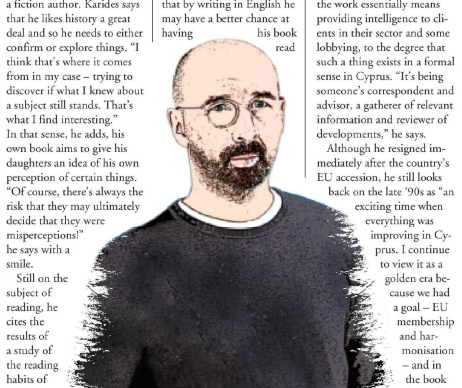
Albert Londres (photo above) wrote The Wandering Jew before the Holocaust. Published in 19301 it makes awkward reading today with its condescending colonial tone, but it stands as a masterful example of investigative journalism2, and is considered a major French literary work.

Londres had immersed himself in the lives of Jews in the East End of London and the Muranow ghetto of Warsaw and witnessed the wave of antisemitic pogroms in central Europe that fueled Zionism. He then traveled to Palestine where thousands of Jews had begun to move in the late 20s buying up land and clashing with what he estimates were 700,000 Arabs there.

His examination of the ‘Jewish condition’ was sympathetic to the cause but also raised concerns about what he described as growing Zionist intoxication. At some point Londres remarks: “You had enough of living under the boot. Everyone can understand how good it must feel to raise your head up high. But if you go around with your head in the air you cannot see what is happening around you.”

While highly personal, his work offered unprecedented insight at the time. It is said to have helped shift public opinion on the plight of the Jews and affected policies on a range of other issues including forced labour and the exploitation of Black Africans. Londres’ unique strength was that he recorded the facts on the ground, documenting the cruelty and injustice and confronting his interlocutors with the implications of their actions.

Without veering into the circumstances of how the ‘wandering Jew’ finally arrived in Palestine or the strife that has engulfed the region ever since, the key fact on the ground today is that the state of Israel exists.

But it is also a fact that this internationally recognised state has killed more than 62,000 Palestinians in Gaza since October 2023. It is a fact that the IDF’s military campaign has pulverized the enclave and that the Palestinians trapped in it are being starved. It is a fact that the International Criminal Court issued arrest warrants for its prime minister and his former defense minister for war crimes and crimes against humanity. And it is a fact that the state faces a genocide case at the International Court of Justice.

To this depressing list one must now add the disgraceful fact that this state is targeting and killing journalists.

According to the Committee for the Protection of Journalists Israel is engaging in a “most deliberate effort to kill and silence journalists” while arbitrarily detaining and torturing others in retaliation for their work. Last month Anas Al Shariff and Mariam Abu Daqqa were added to the list of 184 Palestinian journalists killed by Israel3.

Its audacious war on journalism must be seen in the broader global context in which journalism is being vilified by autocrats like Trump, Orban and Netanyahu who have persistently sought to discredit the journalistic profession. What would petty politicians know of the history of generations of war correspondents who risked their lives to bring out the brutal reality of war and counter the official speak of military authorities? The Fisks, the Efthyvoulous, the Andersons and Foleys who roamed the Middle East and always found ways of infiltrating high-risk war zones for the story because they demanded factual accuracy, the enemy of the aforementioned populist trio.

It is impossible today, in the age of total surveillance and drone targeted assassinations, to expect media organisations to ask of their correspondents to enter Gaza. Which is why international media must continue to insist collectively on gaining safe and unrestricted access while continuing to support their Palestinian colleagues there and to shame Israel for its actions.

On Monday evening Channel 4 News’ foreign correspondent Paraic O’Brien’s speaking from Tel-Aviv about developments in Gaza ended his dispatch with the following remarks: “One more thought if I may; those images you saw in our report from inside Gaza were brought to you by journalists who live and work there. Journalists like myself are not allowed there; And those journalists just like many Gazans are looking for food for themselves and their family but they are doing so at the same time as wanting to shine a light on what’s happening in their home”.  

That ‘home’ has become a far darker place than the ghettos which the journalism of Londres first helped bring to world attention. Israel knows that world attention today is erratic and malleable. It knows also that an ill-informed, confused and increasingly compliant global public is less likely to insist on holding it to account for all that it is doing.

Notes

  1. The Wandering Jew Has Arrived, Albert Londres, 1932. English Translation 2017.
  2. The Albert Londres Prize is the highest French journalism awardfirst awarded in 1933.
  3. CPJ: https://cpj.org/data/killed/2025/?status=Killed&motiveConfirmed%5B%5D=Confirmed&type%5B%5D=Journalist&start_year=2025&end_year=2025&group_by=location

Categories
Uncategorized

Gondoliers of Populism

While visiting the Venice Architecture Biennale last month, I had taken the decision not to write anything that was connected to Cyprus’ participation because a relative had been part of the exhibition’s team.

I resisted even though having walked through the beautifully curated pavilions of Denmark, Canada, Spain and Germany, it was clear that the small and almost out-of-sight Cyprus pavilion had managed to address – less glamorously but far more substantively – the Biennale’s main theme: How, in the climate crisis, architecture needed to adapt and draw on multiple forms of intelligence: natural, artificial, and collective.

Never mind I thought; it was enough that those who visited the Cypriot pavilion, including the Cypriot deputy minister of culture, Vasiliki Kassianidou, were able to appreciate how relevant and how comprehensive in its messaging Cyprus’ participation was.

A thesis that explored how the communal construction of drystone walls in the village of Salamiou in western Cyprus reflected the architectural mentality that is now desperately required in the climate crisis age1. A return to the functionalism of the rural mindset, the connection to the land and the community. A far cry from the Limassol skyscraper glitz and the abuse inflicted of the land and the climate by the country’s now dominant development model.

Never mind that while condemned to draw a minority audience, the artists, writers and curators, guided by a dedicated architect and cultural heritage researcher, Sevina Floridou, explored the social and political repercussions of an indigenous architecture and delivered a profoundly relevant argument while showcasing the toil and inventiveness of Cyprus’ people. Never mind that they highlighted how late-industrialism fractured the land and communities through value extraction, but also how war, colonialism and ecocidal violence displaced people and affected the landscape. Never mind that they succeeded in capturing the values of old-Cyprus, those rooted in community labour, values worth defending and revisiting; I still wouldn’t write about it.

Then, out of nowhere, a Cypriot parliamentarian, Pavlos Mylonas, the chairman of the House Committee on Education, went on a beautifully curated populist rage criticizing the language and some of the terminology used in the book that accompanied Cyprus’ exhibition. He lifted a copy in the studio air of prime-time news shows and demanded that the ministry of culture withdraw it from circulation. He claimed that the language and some of the terms used by the contributors in reference to the 1974 events in Cyprus were inaccurate and unacceptable. How could the ministry of culture, he asked, fund a project that used terminology that went contrary to the official narrative? The national cause was suddenly at risk.

As the Cypriot exhibitors and drystone craftspeople sought to address architecture’s capacity to draw on nature’s intelligence and on the notion of collective intelligence, they underestimated the perennially shallow intelligence of their politicians, the key driver of the cult of Cypriot nationalist populism and the key builder of the walls of division.

Grown men were threatened by the absence of the official terminology and offended by words that on close inspection they had, in fact, mostly misinterpreted. Some deliberately, by exaggerating and addressing them out of context, others as a genuine side-effect of their chronic condition. The ensuing nationalist social media frenzy heightened the call for the withdrawal of the publication.

And then, the ministry obliged; with supersonic speed. A sharp warning to artists and writers receiving public funds to pay a visit to the state’s press office for a ‘briefing’ before exhibiting or publishing. Presumably a convoy of gondolas was mobilized in Venice to move the books somewhere isolated before further harm could be inflicted.

One suspects that the minister, a respected and soft spoken academic, a professor of Archaeology at the University of Cyprus, would have felt insulted being told off by a marginal populist politician. One expects that she would have felt a tingle of embarrassment for not defending the right of free artistic and academic expression. But few would have expected her to kowtow to a populist politician with such unexamined haste after she had herself visited the Biennale and congratulated the team for its work.

The reasons the withdrawal was demanded, she claimed later, were not political but legal and focused on the fact that the ministry was recorded as co-publisher when it had not approved the content. Cheap, unbecoming and definitely self-defeating.

The incident exposes the timid reflexes of the political class -in this case its educated and educating class. It was blatantly obvious that the minister’s instincts are trained not at defending points of principle but at not upsetting the nation’s principal, the nationalist class. On closer inspection, not upsetting her political master’s fragile balances as he panders shamelessly to the far-right ahead of a second presidential term.

Not unlike the professor of Law at the University of Cyprus whose department includes a module on the workings of the International Courts system, who, once turned minister had no qualms visiting an International Criminal Court-indicted politician in Israel2, a professor of Archaeology turned minister of culture succumbed to censoring creative content.

It’s a depressing confirmation of the shadiness and hypocrisy that governs Cypriot public life. A silent disorder affecting the country’s collective capacity to act with integrity and conviction. More menacingly, a disorder which has blinded it to the far right flotilla rowing unobstructed into the mainstream.

  1. https://www.labiennale.org/en/architecture/2025/cyprus-republic

2. https://nicholaskaridesessays.substack.com/p/academic-suicides

Categories
Uncategorized

Academic Suicides

Intellectual integrity can be defined as acknowledging the need to be true to one’s own thinking and to hold oneself to the same standards one expects others to meet.

We demand it of our public intellectuals: the academics, writers and critics to whose independent thinking we count on to make sense of the world’s ambiguities and of whom we also expect to deliver their verdicts with fearlessness and moral consistency.

In illiberal societies such voices are revered by the oppressed and feared by the oppressors. In our own liberal societies, they challenge our schizophrenic collective conduct, bring clarity to the blurriness of our times and expose the inconsistencies of those who govern over us.

Even before Trump’s poisonous attacks on universities began to drive a lot of intellectuals out of their ‘safe houses’, the capacity of academics to live up to their role had suffered from the commercialization of education and the corporatization of their institutions. For years, even in the freer more radical British intellectual scene, academics were being pushed to conform to the whims of the new finance-dependent education order. In some instances, intellectuals end up sitting comfortably within the system they had tasked themselves to judge or disrupt; some ride the social media circus having become celebrities that manufacture intellectual content as commodity. Genuine, dedicated intellectuals are threatened with extinction.

More painfully, there are now those who transition from the lecture hall to the political circus, from ivory tower scribblers to robotic teleprompter readers. Some academics are lured into appointed public office as experts taking on ministerial positions. The decision to take the plunge is no doubt tough; to be fair some jump in with a genuine belief that they could inject integrity into the political process. Professor Michael Ignatieff’s experiment in Canada as recounted in his book Fire and Ashes is a must read for public intellectuals aspiring to transition.

An academic’s eternal tension between their theory and their practice is ultimately tested during crises. Nothing has tested their -or indeed our own individual – intellectual integrity as deeply as the genocidal crimes against the Palestinian people in Gaza.

Last month at the European Union’s Council of Ministers the Dutch foreign minister submitted a motion for “a review to establish whether Israel had violated its human rights obligations under Article 2 of the EU-Israel Association Agreement” an agreement that is “based on respect for human rights and democratic principles”. A belated but welcome shift in the EU’s weak reaction so far, given that the review was first proposed by Spain and Ireland as far back as February 2024.

At the Council, Cyprus was represented by its foreign minister, Constantinos Kombos, a public intellectual, a founding member of the University of Cyprus’ Department of Law and until his ministerial appointment in 2023 an Associate Professor in Public Law there.

Mr Kombos, who has since then built a reputation as a quiet and effective minister, argued against the Dutch proposal, objecting to exploring whether Israel may have violated the EU’s red lines. He did say that Cyprus considered the humanitarian situation in Gaza to be tragic and unacceptable and that Israel must allow the flow of aid. But he rejected the motion in terms of the procedure and the benefit which would arise. His concern wasn’t the content, he said, but whether this move would lead to anything useful, especially without EU experts on the ground in Gaza1.

In the struggle to increase pressure on Israel and as time was running out for starving Palestinians, the Cypriot objection on the basis of technicalities stunk of hypocrisy. It was foolish, but in the end, also irrelevant, as the motion was supported by 17 of the 27 members, with 9 against and one abstention.

Cyprus’ pitiful position was not unexpected as it had been preceded by a more blinding display of moral bankruptcy when the Cypriot president and Mr Kombos visited Benjamin Netanyahu in Jerusalem last month. Their visit ignored the weight of the International Criminal Court’s arrest warrant for the Israeli prime minister who is held responsible for the war crime of starvation as a method of warfare and for crimes against humanity. In his public statements2, standing next to Netanyahu, the Cypriot president mentioned the situation in Gaza zero times.

Around this time of the year, during the University of Cyprus’ spring semester Mr Kombos’ Department of Law runs an obligatory six-credit course for second-year law students. In week 8 and 9 of Module 205, students are taught about the role and significance of the International Court of Justice and the International Criminal Court – the one that indicted Mr Netanyahu.

The Cypriot minister’s academic self-destruction is of course a personal choice and would have been of little public concern if it had not also exposed the slow public death of Cyprus’ integrity as a country; a small and often ignored occupied state that has constructed its national narrative on the idea of justice and has for decades pleaded desperately for the respect of international law.

International politics always generate contradictions and politicians always rush to deny them. Public intellectuals, however, are obliged to expose those contradictions. More so when the sanctity of international law is at stake. Public intellectuals who opt to become politicians or ministers are not absolved of that burden of duty.

1. https://knews.kathimerini.com.cy/en/news/cyprus-talks-humanitarianism-but-ducks-eu-move-to-press-israel
2. https://www.gov.il/en/pages/pm-netanyahu-meets-with-cypriot-president-nikos-christodoulides-4-may-2025

Categories
Uncategorized

Reporters without Respect

Row over Reporters without Borders Index exposes journalism’s real quandary

It is rather curious, bordering on the suspicious, when a news organisation comes out to defend the state of media freedom in the country in which it is published. Not that media freedom in any said country might not be first class – one could for example be working in Norway – but primarily because journalists have a tendency to complain however good the conditions.

So, it didn’t seem quite right when earlier this month the Cyprus Mail in an editorial under the headline “Press freedom alive and well in Cyprus, despite what report says” rebuffed the findings of Reporters Without Frontiers (RSF) which found that the country had dropped 12 places to 77th in the World Press Freedom Index1.

Thanks for reading! Subscribe for free to receive new posts and support my work.

The Mail went further to criticize another newspaper, the former communist party’s mouthpiece Haravghi for blaming (unsurprisingly for Haravghi) the last two right-wing governments for the slide. The Mail objected asserting that the situation in Cyprus “is not problematic, as the RSF claims, but pretty healthy. It might not be perfect, but is it perfect anywhere in the world?”

An uncharacteristically soft but, more seriously, a potentially dangerous approach. It reflects the maddening Cypriot practice of settling for cozy mediocrity (at best) always quick to dismiss the findings of expert bodies. A persistent reliance on the illusion that things are not that bad which prevents the country from becoming better.

But the Mail’s approach is dangerous for another reason. It is just not true. The situation in Cyprus is problematic.

While rankings, and our fixation with them are distracting and RSF’s work is not scientifically foolproof, it remains a valuable tool and indicator. More so as its overall assessment is corroborated by the more scrupulous monitoring from the EUI’s Centre for Media Pluralism and Media Freedom2. Both organisations monitor variables that are crucial for the proper functioning of media and democracy encouraging vigilance by watchdogs while putting pressure on stakeholders and practitioners.

In Cyprus’ case the RSF report described the influence of the government, the Church and business interests over the media as significant elements that “undermine media pluralism and push journalists towards self-censorship”. It raised concerns about “direct interference in editorial decisions through informal relationships between politicians and media owners, the growing media concentration and the lack of transparency in media ownership.”

This is in fact the type of criticism that the Mail’s own flagship Coffeeshop column had frequently identified. And it is the reason why the Mail – at least until some years ago before it was purchased by a local legal firm – was considered the island’s only independent newspaper. Established in 1945 and ran by generations of newspapermen it was healthily detached from the establishment (and very often ignored by it) allowing its reporting to be bold and free of local bias and hyperbole. Governments of the day underestimated its significance but the paper was read by the diplomatic community, the Cypriot intelligentsia, the substantial non-Greek-speaking population and the diaspora.

Today, while it might be true that the Mail remains free of the influence of the government and the Church, one may question whether it is free of the influence of business interests, especially those of its new owners3 and possibly their clients.

More recently the paper introduced a new slogan: “News that Matters” begging the question: To whom? And to what end? The answer lies in the new suffocating culture of business worshiping that has embraced the country’s media over the last decade which has blown the vital door between their editorial and commercial departments wide open. In the age of fewer journalistic staff, more sponsored content and press releases posing as reporting, the barrier between editorial positions and commercial interests has been obliterated – against the public interest.

In a democracy, we the citizens offer and defend the media’s right to be free of state control but also of private control. And while we defend their right to be free, we do not offer them the right to be free from being accountable to us. Running a newsroom is a profound public duty and involves a covenant of trust. Those to whom we offer the freedom and privilege to exercise that duty are expected to be guardians of that trust – not promoters of the interests of their owners or funders.

The situation in Cyprus is made worse by the fact – shameful for the Cypriot state – that there is no functioning legal framework regulating the media landscape. This has bred chaos online and allowed ill-equipped or malicious media owners and operators to push their political or economic agenda onto an unsuspecting public without the burden of accountability, including to the Cyprus Media Ethics Committee.

Independent journalism needs independent financing. And while there is truth in the notion that no one can be absolutely objective, news organisations, serious ones at least, can put in place objective editorial processes to eliminate bias from their decision-making.

More and more media outlets are discovering that to have credibility they have to be transparent – about their ownership and their editorial processes. It is important for the public to know who the media are and where their news selections and views are coming from to decide whether they can be taken seriously or not. At a time when media globally are struggling financially and corporate investors are rushing to ‘save’ them, big money is devouring their soul and eroding the public’s trust and respect for them.

Bucking the trend is the world-wide growth of non-profit collaborative journalism (even here; the Cyprus Investigative Reporting Network is an example). It’s a new journalism that relies on donors, crowd funding and memberships rather than corporate investment and advertising. The situation is not hopeless. A growing movement of citizens is demanding more. If media want their trust and respect, they need to become trustworthy and respectful. Profit won’t come quickly but journalism was never meant to be about that.


1. RSF – https://rsf.org/en/index

2. CMPF – https://cmpf.eui.eu/media-pluralism-monitor-2024/

3. CIREN – https://ciren.cy/who-owns-the-media-in-cyprus/

Note: The author is the director of the Institute for Mass Media; a member of the Board of Advisors of the Cyprus Investigative Reporting Network and a member of the Cyprus team for the Centre for Media Pluralism and Media Freedom.

Categories
Uncategorized

Europe stuck between a Circus and a Horror Show

The former German chancellor Angela Merkel was caricatured as Adolf Hitler in the Greek gutter media in 2015 for her tightrope role in steadying the Eurozone and keeping the collapsing Greek economy within it. It was the same year in which she controversially allowed a million refugees into Germany advocating for a more humane European migration policy.

Merkel had told Germans “We can manage this” and to a large degree they did, until the whole thing collided with lurking populism always ready to trigger and then amplify discontent.

A year later Americans elected a caricature for president and Merkel endured Donald Trump’s tantrums beginning with his withdrawal from the Paris Agreement on Climate Change. It was a personal blow for her not just because of the damage to years of painstaking work but because as Helmut Kohl’s minister for the environment, she had convened the very first UN Climate Change Conference in 1995 in Berlin.

There would then be the awkward moment in 2018 when Trump refused to shake hands with her at the White House1: “Instead of stoically enduring the scene, I whispered to him that we should shake hands… As soon as the words left my mouth, I shook my head at myself. How could I forget that Trump knew precisely what he was doing… He wanted to create conversation fodder through his behavior, while I had acted as though I were having a discussion with someone completely normal.”2

Merkel was used to bullies. Trump refusing a handshake was nothing compared to how uncomfortable she was made to feel in 2007 when Vladimir Putin allowed his large Labrador into their meeting after his staff had been specifically warned that she was afraid of dogs.3

The tactical similarities between Trump and Putin begin to make sense if you go by Merkel’s description of the US president in her recent autobiography: “[Trump] was really fascinated by the Russian president. … I received the distinct impression he was captivated by politicians with autocratic and dictatorial traits.”

Fast forward to February this year and to the humiliation suffered by Volodimir Zelenskyy in the White House4 and one begins to understand that Trump’s show was put on to impress Putin.

Just four years after Merkel’s departure from the scene Europe is squeezed between these two petty tyrants. A corrupt and capricious one to its West and a poisonous, paranoid one to its East.

To make things worse, it is now a Europe maligned by the absence of real leadership and weakened by the absence of Britain. More ominously, it is a Europe infected by puny Trump-Putin clones, a racket spreading disorder and deceit bolstered by an orchestrated disinformation network with Putin as the silent grand master and Trump as the loud jester.

Russia has no tradition or practical experience of democracy. Scholars have even argued, unfairly if one contemplates the heroism of Boris Nemtsov and Alexei Navalny, that its people prefer the authority of supreme rulers. At the other end, Trump’s betrayal of Ukraine, the suspension of international humanitarian aid and his contemptible treatment of allies means that the United States no longer stands for the old American virtues and the liberal order it once claimed it defended.

The decline had been obvious. The Obama interlude slowed but did not reverse it. Biden paused the slide but, in the end, was swept by it. From as far back as Kissinger’s well disguised ruthlessness to Hegseth’s recent poorly disguised incompetence we knew the US stood for a free world only in name and by selective execution.

What we did not know was how deeply eroded its own democratic structures had become. What we could not expect was the Republican Party’s total collapse exposing the greed of its backers and the ignorance and vulnerability of its supporters. Nothing, however, could have prepared us for the weak reflexes of resistance by the Democratic Party, the media and universities – though not all journalists and not all academics.

So what is Europe to do? Caught between the collapse of institutional order in Washington and a malicious enemy in Moscow, it cannot avoid redefining, even re-inventing itself.

This doesn’t mean that it must forfeit its credentials of moderation, consensus, and multilateralism. But it does mean admitting to the ruinous complacency of its security reliance on the US and finding the moral courage to stand up to him and endure the economic pain that will follow.

It means member states boosting defense by taxing their rich while reversing economic policies that have led voters down populist traps and extreme political choices. It means supporting its youth through better housing policies and re-investing in social services that attend to the needs of humans, not to the demands of markets and public-private-partnership sell outs. It means toughening up on large online platforms and their algorithmic darkness, addressing the inequalities brought by financialization and the blind adulation of big-tech. And, once and for all, stop obsessing over the metric artificiality of growth as the sole arbiter of progress.

Believing in the European project does not mean that you do not recognize the faults that afflict it like its slow complex and self-consuming bureaucracy. But Europe is complicated because sustaining peace and prosperity is a complicated task. Simple, ephemeral and, in the end, dangerous ‘solutions’ are for simpletons like Trump and dictators like Putin. Merkel knew that better than anyone but at the time she played along because of cheap Russian gas and cheap US security. Things have now changed. Post-Ukraine and post-US meltdown there’s an urgency that didn’t exist when Merkel was around.

The European project may have started as a ‘common market’ and evolved into an economic community but now its member states can only survive if they rally their citizenry to believe in a new, tougher single European polity. It may seem counterintuitive but by knocking it out of its comfort zone Trump and Putin have actually done Europe a favour.

Photo: Brendan Smialowski, AFP

1 https://www.washingtonpost.com/video/politics/trump-merkel-meet-in-oval-office/2017/03/17/d99e2bf4-0b32-11e7-bd19-fd3afa0f7e2a_video.html

2 Freedom: Memoirs 1954 – 2021, Angela Merkel and Beate Baumann, 2024

3 https://edition.cnn.com/2016/01/12/europe/putin-merkel-scared-dog/index.html

4. https://www.google.com/url?sa=t&source=web&rct=j&opi=89978449&url=https://www.youtube.com/watch%3Fv%3Dmr1Nhapstr8&ved=2ahUKEwibwNODzuyMAxXGRKQEHUDFNlIQwqsBegQIEBAF&usg=AOvVaw167JzMDh3WGkqIdf9x_dMA

Categories
Uncategorized

The battle of the Verses

I never cared much for Salman Rushdie’s work. I had tried to read The Satanic Verses not as the promising novel everyone said it was, but as the symbol it inevitably became when, instead of writing a book review, Ayatollah Khomeini decided to write an execution order. The fatwa started what Christopher Hitchens described as the opening shot in a cultural war on freedom, freedom of speech in particular.

My relationship with fiction already strained, I became one of those readers Rushdie identifies in his most recent book, KnifeMeditations After an Attempted Murder (Jonathan Cape, 2024), as never having gone past page 15 of the Verses. I had little interest in the literature stemming out of the post-colonial immigrant experience in Britain and, in the end, could not invest in a novel purely to discover the basis on which a theocracy would justify issuing a decree for the assassination of its author. 

But, after several riots and assassination attempts, years of living underground, guarded by the UK Special Branch, not to mention many books, it became impossible not to develop a degree of interest in Rushdie. Where had he been hiding, how did he find the courage to reappear, to travel and lecture? Insecure, yet defiant, Rushdie told David Remnick that at some point he had come to feel that “all that” was a very long time ago, and that the world had moved on.

Move it did, yes, but not forward. In August 2022, over three decades after Khomeini’s death order, the 75 year-old Rushdie was attacked on stage at the Chautauqua Institution in New York minutes before he was about to deliver a speech. He was stabbed repeatedly, suffering horrific injuries including the loss of his right eye.

In Knife, Rushdie does not name his assailant; he refers to him only as ‘the A’, to cover what he says are less decorous references he uses in the privacy of his home. Hadi Matar, born in California to Lebanese parents, had not bothered to inform himself about the man he had decided to kill. “By his own admission”, writes Rushdie, ‘the A’ had read “barely two pages of my writing and watched a couple of YouTube videos of me, and that was all he needed.”

That Matar knew so little of Rushdie is indicative of the shallow digital life most people live these days. But it is not as jarring as the fact that – according to Ayatollah Khomeini’s son – his father had never read The Satanic Verses. The fatwa was actually a political ploy to assert Khomeini’s authority in Iran at a time when he was both physically and politically weak. Khomeini, it turns out, was less a fundamentalist and more of an ordinary populist.

Knife is Rushdie’s attempt to understand the latest attack and to expose the ludicrousness of theocratic politics. Parts are gory, others, where he imagines a conversation with Matar are awkward. But you cannot but admire the calm word-by-word revisiting of every blow and of every rehabilitated step.

Not merely a recording of a reluctant expert’s struggle, this is also an analysis of the new-found audacity of the populist onslaught on liberal thought and freedom of expression. Only last week India’s government sought the prosecution of Rushdie’s fellow Indian-born writer Arundhati Roy for comments she had made about Kashmir over a decade ago.

Art, Rushdie claims, challenges orthodoxy, it sets the artist’s personal vision against the received ideas of the time, the cliches and ideologies that depend on invisible sky gods. He calmly dissects and re-assembles the battle of stories, old and modern, and satirises the new malevolence. Good writing, he argues, will always outlast such ideologies and calls for the overturning of “false narratives of tyrants, populists and fools by telling better stories than they do, stories within which people want to live”, and not die, or, indeed, die for.

By documenting his ordeal, Rushdie has also afforded himself the chance to hit back at those who had joined forces with the Islamic attack on him in 1989. John Berger, Germaine Greer, Roald Dahl, even curiously, former US President Carter. And, to extend his gratitude to those who did come to his support. Among them his close friends Martin Amis and Hitchens who at the time offered the most lucid assessment on the subject: “It was a matter of everything I hated versus everything I loved: In the hate column: dictatorship, religion, stupidity, demagogy, censorship, bullying and intimidation. In the love column: literature, irony, humour, the individual and the defense of free expression.” 

The tensions Hitchens identified feel deeper and harsher today. Fatwas may no longer be necessary but the large ignorant crowds that were once steered onto the streets are today unleashed as digital mobs to riot on large online platforms.

It is where populist autocrats and their armies of influencers stab away at artists, writers, journalists and activists by spreading disinformation and hatred, always in an effort to silence them. As captive users of these poisoned and unregulated platforms ourselves, we are faced with a choice: become participant-observers in the rioting spectacle by consuming the illiberal sloganeering narratives or, resist by shunning the online trash completely, stepping back and returning to the study of the readings. Rushdie’s book and its cutting verses are as good a place to re-start.

Photo: Euronews

Categories
Uncategorized

The 12-year Hitch

Christopher Hitchens, the British born American journalist and writer, died exactly 12 years ago today, on 15 December 2011, aged 62. In recent days, following the death of Henry Kissinger, the former US Secretary of State, at the age of 100, Hitchens resurfaced in the news.

Hitch, as he was known to his friends, had spent years deploying his relentless journalistic intelligence to push for Kissinger to face justice for crimes against humanity committed in Vietnam, Cambodia and Chile. In 2001 he had dedicated his book The Trial of Henry Kissinger1 [the original rejected title was Henry Kissinger: Portrait of a Serial Killer] to “the brave victims of Henry Kissinger, whose example will easily outlive him and his ‘reputation’.”  

And reputation – legacy – is what it’s all about. In the last weeks some writers could not resist pointing to the ‘injustice’ that Kissinger’s lifespan had out-passed the smoke-filled alcohol-rich life of his critic. Less flippantly, whether a form of justice was in fact served, given that twelve years after his death, Hitchens managed to infiltrate almost every Kissinger obituary hacking the whitewashing that the former Secretary of State had diligently orchestrated since he left office in 1976.

The notion that longevity is somehow a divine reward for a worthwhile life would have made the atheist Hitchens laugh. As would the self-deceiving Christian Orthodox comfort-talk, murmured at the funerals of those who have died young, that God tends to recall early those he/she loves the most.

Now that they are both dead it could be argued – and here one has to be respectful of Hitchens’ atheism – that a more ‘divine’ justice has been served by the fact that while Kissinger overstayed, it is the early-departed Hitchens who is forever missed. For his wit, his breath of knowledge, and his capacity to connect the shallow immediacy of politics to the heavy weight of history.

He is especially missed by those who lament the absurd state of global politics and the shameful level of our public discourse. A state of affairs that is nothing less than Kissingerian; a reflection of the dominance of Kissinger’s amoral school of political thought where expediency rules and where autocratic populist leaders’ rise to power is backed despite their record of suppressing free thinking and reasoned dialogue.

Both men played a role in how I personally see the world, the political world at least. Kissinger as the bogeyman who haunted the fate of Cyprus in the mid Seventies through his duplicitous disregard for international law and his unsentimental view of human suffering. Hitchens, partly for writing the first definitive book on Cyprus2 that exposed Kissinger’s machinations at a time when Nixon’s Watergate paranoia had rendered the Secretary of State the de-facto Commander-in-Chief.

But, more importantly, because Hitchens exposed – with equally Kissingerian unsentimentality – wrongdoings and misrepresentations and fought for the freedom of ideas and seemingly forgotten political causes. And because, with his own brand of uncompromising journalism, he exposed the hypocrisy of institutions and political leaders. He deconstructed organized religion and identified the illiberal trajectory of our disorganized democracies and shot down bullies and bigots pursuing the truth without regard to personal consequence.

Both men were mesmerizing conversationalists who hovered behind-the-scenes in Washington and paraded in front of the global media glare. But behind that glare Kissinger inhabited the darkness where corporate greed mingles with political power while Hitchens lived in the trenches and on the page where facts battled myths.

As a politician of intrigue and deception Kissinger used words to hide what he was thinking and wrote to boost his ego and obfuscate what he had once done. As a political writer Hitchens used words not just to deliver with exactitude what he was thinking, but to expose with scathing sharpness what Kissinger-types were hiding.

The greatest pity perhaps is that in the twelve years since Hitchens’ death, the world has been deprived of a fierce and illuminating critique of so many other contemptible political figures who rose to power on the back of Kissinger’s rotten ethics.


  1. The Trial of Henry Kissinger, Verso, 2001
  2. Cyprus, Quartet Books, 1984; Later published in paperback as Cyprus: Hostage to History, Verso, 1997.

 Photo: Corbis via Getty Images

Categories
Uncategorized

Large Language Mimicry

The complexity and hype surrounding Large Language Models make it difficult to disentangle the arguments about generative AI’s potential harms. But one can have little sympathy for those who seek the assistance of ChatGPT to sort out their understanding of the issue. It may be the strongest evidence yet of our species’ voluntary dumbification.

On top of the hype there’s the spin from the industry itself. The recent confessional drama by big tech leaders warning of the risks and coming out in favour of regulation is alarming but doesn’t seem that genuine. Sudden talk of an existential threat betrays that they may have not been telling the whole story all this time and, worse, that they might actually have already lost control of AI’s “deep learning” process.

Yet, despite their collective concern, we know that independently they are doggedly trying to stay one step ahead of each other. And while this is certainly an opportunity for watchdogs to reach for thick red pencils we also know, rather depressingly, that regulators will always lag behind accelerating innovation.

Then there’s the language. Not the language of Large Language Models per se but that which is used by us when it comes to talking about them. We have been unable to defuse the linguistic traps that keep feeding the hyperbole. In an interview1 with the FT the science fiction author Ted Chiang protested about the use of personal pronouns when referring to chat-bots and lamented the anthropomorphic language such as ‘learn’, ‘understand’ and ‘know’ that are projected on them to create an illusion of sentience where, he claims, none exists.

AI is not a conscious thinking intelligence says Chiang describing the term as “A poor choice of words in 1954”. Had a different phrase been chosen for it back in the 50s we would have avoided a lot of the confusion we’re having now. His preferred term for AI? “Applied Statistics”.

Consider the ‘writing professions’: Legal firms have already began to advertise the services of their AI driven “digital lawyers” who “accept” and “understand” legal questions and who not only connect a client’s questions to laws and cases but claim to draft bespoke documents for signature. Essentially, in Chiang’s applied statistics logic, these services are supercharged search engines that draw relevance on the basis of words (which they don’t ‘understand’) and then simulate existing text formats to produce prose in acceptable tone and syntax.

Aside from mismatched or entirely made-up results (there’s the recent case of the US lawyer fined for his chat-bot’s hallucinatory court citations)2 the engines lack comprehension of that which they deliver. Still, the client saves time and pays much less than the hourly rate a human lawyer would have charged for the work. There’s nervous excitement in the legal profession that entry-stage legal associates aren’t that necessary anymore. Of course, while legal AI is doing the work, entry stage legal associates are losing the capacity to learn to do it themselves, but that’s another story.

The same principle operates for data journalists who are assisted by AI that scrapes, sorts and catalogues swathes of data. Tools that sift through material identifying and matching information which journalists are then able to study for potentially dubious connections to expose wrongdoings. One hopes journalistic AI won’t soon be drafting the story. That should still require the journalist to challenge the veracity and value of the information, contemplate the repercussions, address the ethical dilemmas and employ the right language to make the story work. Not to mention avoid being SLAPPed3 by any clients of the legal AI community.

Yet with every passing month the capacity and popularity of Large Language Models is expanding. Despite their unreliability there’s a clear societal shift for the acceptance of their type of mimicry.

The result is that algorithmic systems take all the bad, incomplete -and let’s not forget often- malicious writing produced and feed it back into the large pool making it primary reference material that perpetually decays the information ecosystem. Shallow imitative writing that is hyped, even propagandist, is becoming an ingredient of our exchanges, a messy by-product of the cultural phenomenon we have embraced as ‘disruption’.

Throughout this year’s ChatGPT delirium from cheating on essays to writing marketing-speak and ‘supercharging’ businesses we may have forgotten that the skills developed by writing, questioning, double-checking and debating are what lead to better thinking and better judgment. At this rate the machines won’t really need to do much to achieve the much feared total take-over. We have already surrendered; willingly, unthinkingly.

Notes:

1. https://www.ft.com/content/c1f6d948-3dde-405f-924c-09cc0dcf8c84

2. https://www.theguardian.com/technology/2023/jun/23/two-us-lawyers-fined-submitting-fake-court-citations-chatgpt

3. SLAPPS: https://www.the-case.eu/

Cartoon by Tom Fishburn

Categories
Uncategorized

Single Source Sabotage

It was painful to have to doubt Seymour Hersh’s explosive Substack story1 last month in which he claimed that back in September 2022 it was US Navy divers that had sabotaged the Nord Stream gas pipeline which links Russia to Germany through the Baltic Sea. Not because the events he reconstructed couldn’t be true but mostly because – on the basis of just the one source he used in his 5,200-word report – they can’t conclusively be proven to be true.

More painful is the thought of what it could mean to his legacy if indeed it actually turns out not to be true; the damage to that elusive super-power that few journalists possess, credibility. Not to mention the erosion of the public’s perception of his other stories over the years – however watertight they had been.

Open-Source Intelligence (OSINT) experts swarmed over Hersh’s pipeline story and began to produce detailed technical evidence in an attempt to debunk his claims. It was both infuriating and rather suspicious when some unashamedly chose the ad hominem path to make their point.

Seeing otherwise credible OSINT reporters spitefully ridicule the 85-year old ‘last great American reporter’, came across as crass and stunk of partisanship. He may or may not have got it right but their eagerness to take him down rather than genuinely help to bring journalistic closure seemed inappropriate.

Perhaps it is indicative of the new lone-ranger Twittering journalism. A noisy rebutting of “my journalism against yours” which fuzzes the facts and leaves the many malicious players out there free to continue to sabotage our capacity to get to the truth.

Some of the criticism against Hersh is clearly legitimate. Two source confirmation is basic journalism. Despite their tasteless glee, many experts appear to have correctly exposed plausibility issues in his story.

When news of the explosions first broke the New York Times called them a mystery and, until Hersh’s story, the prevailing, though counter-intuitive narrative, was that this had been the work of the Russians. In recent days OSINT experts such as Oliver Alexander2 put forward new hypotheses, the latest being that a Russian vessel ill-equipped to the task of welding the pipeline back in 2019 could have been responsible for the rupture [though it is accepted that there were two explosions on two separate occasions on two different pipes]. 

Fiona Hill, former foreign affairs advisor to presidents Bush, Obama and Trump, told Unherd on 22 February that she initially thought it was the Russians3. Now, she said, she was not so sure. She didn’t believe it was the United States adding that some of her colleagues think Ukraine could have done it: “But I just want to make it very clear that I absolutely do not know who carried this out.”

For half a century Hersh broke difficult stories which when he got right changed the course of history and our notion of journalism. He exposed the My Lai massacre in Vietnam that led to the conviction of the US Army Officer who ordered it. More relevantly he had provided the first comprehensive account of President Nixon’s secret bombing of Cambodia. Hersh was the reporter Bob Woodward telephoned in 1973 to thank him that he too had begun to report seriously on the Watergate story. Everyone had been doubting it. He and Carl Bernstein could not do it alone, Woodward admitted4.

It is not impossible that on this story Hersh’s one source – however reliable – may have double-crossed him. Detailed and convincingly argued as his catalogue of events is, it is not impossible for almost all of it to be untrue.

Now a Substack lone-reporter, Hersh no longer has Abe Rosenthal or David Remnick, his one-time Editors at the New York Times and the New Yorker to pull him back. His latest investigation is unlikely to have been supported by the painstaking fact-checking teams imperative for quality news reporting to achieve accuracy and sustain credibility. Without an editor he may have been too hasty, too eager. He may have been carried away by President Biden’s remarks over a year ago, weeks before the Russian invasion of Ukraine, in which he defiantly said “If Russia invades…there will be no longer a Nord Stream 2. We will bring an end to it”5.

Yet, this whole affair is not just about Hersh. It is about journalism more broadly. A journalism in which big stories still require the newsroom’s teamwork, the researchers, the team chasing multiple sources, the fact-checkers, the lawyers, and ultimately, the Editor who will shoulder responsibility.

There are very few experienced Quixotic reporters out there and Hersh is one of them. But, clearly, even he can’t do it alone. A journalism without the backbone offered by teamwork and without higher editorial responsibility tied to codes of conduct will always fall short. It will also fall prey to dubious lone-shooter reporting. Hired, malicious and partisan ‘journalists’ have already infiltrated our information sphere deliberately creating a lot of noise and doubt.

The deeper problem is that a public held in a state of perpetual confusion will become even more distrustful of journalism. It will believe nothing, even when important stories such as Hersh’s are, in the end, conclusively proven to be true.

Notes

1 https://seymourhersh.substack.com/p/how-america-took-out-the-nord-stream

2 https://twitter.com/OAlexanderDK?ref_src=twsrc%5Egoogle%7Ctwcamp%5Eserp%7Ctwgr%5Eauthor

3 https://unherd.com/2023/02/absolute-victory-over-russia-isnt-possible/

4 Reporter, A Memoir, Seymour Hersh published by Penguin: https://www.penguin.co.uk/authors/31320/seymour-m-hersh

5 https://www.youtube.com/watch?v=OS4O8rGRLf8

Photo: NYT/Redux from the NYRB

Categories
Uncategorized

The elephant in the ward

A week after the death of Queen Elizabeth in September, India replaced Britain as the world’s fifth-largest economy1.

A few weeks later King Charles acceded to the throne to become head of the Commonwealth while an Asian Hindu MP became Britain’s prime minister.

The first sentence captures the end of a royal era and the statistical reality of the new global economy. The second reveals the normative yet incongruous notion that King Charles heads the Commonwealth in which his country is no longer the powerhouse it once was. But, it also shows how Britain, with all its faults, still maintains an often accidental capacity to shock itself into progress.

Keir Starmer, the Labour leader of the opposition, described Rishi Sunak’s election (it was more of a Tory coronation2) as a significant moment that proved that Britain was a place where people of all races and all beliefs could fulfill their dreams. Many didn’t think that they would live to see the day, he said, and described it as part of what made him so proud to be British.

Pride works best when there’s some recognition by those around you that it is deserved. Everybody knows Sunak’s move from 11 to 10 Downing St was forced upon the Tories. Sadly, there are few things left for which Britain can be proud of and a lot fewer for which it can be envied.

The National Health Service used to be one them. Labour’s Health Minister Nye Bevan had described the birth of the NHS in 1948 as “the most civilised step any country has ever taken”. It became in a very practical sense a representation of Britain’s true common wealth. Actual, shared wealth, not a crass rebranding of colonial exploitation, even though many might claim that it was achieved on the back of that colonial hegemony.

While it became inevitable that one day Britain would lose its primacy and clout in the Commonwealth3, it was not inevitable that it would lose the plot on the NHS.

In the 80s when the common wealth of Rail and Water were lost to profit, Margaret Thatcher had said, somewhat disingenuously, that the NHS, “was safe in our hands”. Labour under Tony Blair and Gordon Brown introduced much needed reform with the latter famously saying that “the NHS is the best insurance system for the long term”4.

David Cameron’s happy-go-lucky capitalism further eroded the Bevan project and gradually gave way to kleptocratic alliances between reckless business interests and the new generation of irresponsible, opportunistic Tory politicians.

We have gradually begun to forget that a Britain that would have stayed in the European Union would not have operated the way its leadership now feels allowed to. Its EU membership had obliged it to live up to its status as a robust, mature European state. Despite the periodical shenanigans of its leaders it was anchored in common sense and its partners saw it as the home of political realism. Its civil service taught its European partners efficiency as its political class benefited from Europe’s culture of compromise. And while it often also provoked its partners, in a strange self-regulating way it was tamed by its reputation as the sane country it was perceived to be. Not any more.

As the NHS’ ambulance and paramedic strike takes hold, Health Secretary Steve Barclay – who it should not be forgotten served as Brexit negotiator – yesterday called on the public to use their common sense and to consider that the system will be under very severe pressure5. Of course it will be. Since Brexit the whole country has been under very severe pressure.

The problem is that the Tories are too self-obsessed to grasp it while Labour is too divided to admit it. More disconcertingly Bevan’s party also seems too timid to be able to do anything radical about it.

Photo: Nye Bevan at Park Hospital, Manchester, meeting 13-year-old Sylvia Beckenham, the first NHS patient; The Daily Herald, 6 July 1948.

1. https://www.weforum.org/agenda/2022/09/india-uk-fifth-largest-economy-world

2. Rishi Sunak became PM with less than 1 percent of the British vote. 

3. Need to be fair that the Commonwealth as an institution does good things in research and education bringing people together and supporting communities.

4. https://www.ncbi.nlm.nih.gov/pmc/articles/PMC2190266/

5. https://www.indy100.com/politics/steve-barclay-common-sense-ambulance-driver

Categories
Uncategorized

Jim, John, Bjorn and the GOAT

I doubt I fully appreciated the trouble my father had gone into to secure my first ever Centre Court ticket at Wimbledon in June 1979. I had desperately wanted to watch Bjorn Borg, my childhood hero, but instead we got his tenacious rival (pre-McEnroe), the player who invented the tennis grunt (pre-Sharapova), Jimmy Connors.

We watched the American World No.3 come back from a set down to defeat Marty Riessen in the second round and overawed as I must have felt just being there, I probably consoled myself that there was value in watching my hero’s arch enemy close up. Borg overpowered Connors in the semis and despite being pushed in the final by the freaky serves of Roscoe Tanner he went on to win his fourth Wimbledon title.

Until that moment there was really no talk of a ‘Greatest of All Time’ (GOAT). There were several ‘greats’, Perry (mostly for the British), Laver, Emerson, but no definable GOAT.

In the following year, 1980, in the second most spectacular Wimbledon final ever (the 2008 Nadal-Federer one was by far the best), Borg defeated the impertinent and painfully talented John McEnroe to win his fifth title1. People then began to talk of a GOAT.

Five Wimbledon titles in a row, the Swede was on the cusp of greatness. In its cover story in June 1980 TIME magazine asked ‘Is he the best player to ever lift a racquet?’ 2

Then, after losing to McEnroe in his sixth Wimbledon final in 1981, GOAT talk was temporarily suspended. It was permanently terminated two months later when after losing in the US Open final (again to McEnroe) Borg not only shunned the award ceremony (for which he was booed by the crowd) but left New York and walked out of professional tennis. Completely. He had won 11 Grand slams. He was 26.

By coincidence at 26, in 2012, Rafael Nadal (pictured above with Borg) had also won 11 grand slams: 7 French, 2 Wimbledon, 1 US Open and 1 Australian. He too was on the cusp of greatness, though he had to put up with (but also be thankful for) the cruising dominance of his arch rival Roger Federer who had by then won 13 grand slams. At that moment both were behind Pete Sampras’ record of 14.

Today what makes the 36-year-old Nadal a GOAT contender is not just that he leads the pack having accumulated 22 grand slams but that he has done so in a career that has spanned two decades and, crucially, he has done it despite the degenerative Mueller-Weiss Syndrome which affects his foot.

The Spaniard has played with painkillers for most of his career. “I am not injured; I am a player living with an injury” he said recently. Mueller-Weiss syndrome is a rare disease where the navicular bone in the foot undergoes spontaneous osteonecrosis. This causes blood to be cut off from the navicular bone, causing pain and deformity3.

The glamour and the prize money often obscure how excruciatingly demanding the sport is. Nowhere else do players battle it out alone for four, sometimes five hours. At best, professionals – who essentially start an intensive junior career as early as their late teens – can on average look ahead to a 12 to 15-year long career.

Nadal turned professional at 15. He has been an impeccable one for 21 years. He is the only player that has been in the Top Ten for 17 years without fail. Federer who was born the year Borg retired is 41 and intent on playing more. Serena Williams, who announced she will retire after the current US Open, dominated women’s tennis from 1999 to 2017. She won her last slam that year two months into her pregnancy. With 23 to her name, she is, for the moment, ahead of Nadal, Djokovic and Federer.

Our media induced obsession with metrics drives competition and comparisons and generates ticket sales and television viewership. Numbers sustain narratives. Records and the desire to break them prolong careers. While going for his 23rd grand slam at Wimbledon this summer Nadal had to withdraw in the semis following an abdominal tear he had picked up in the quarters. On the morning of his match, labouring over whether he should face the talented but insouciant Australian Nick Kyrgios, Nadal practiced for an hour just to test the injury. Kyrgios later admitted that he had practiced for only an hour a day leading into the championships.

Hard work and discipline are key ingredients of legendary status. What made Borg one was not the unconventionality of his strokes, the top-spin and the hockey-stick double handed backhand but his endless practicing and the cool discipline behind his stubborn desire to win. For reasons that those of us outside must acknowledge we cannot comprehend he suddenly lost that desire. Thankfully, and equally incomprehensibly, Nadal has not.

In the end the debate about the GOAT is misleading if not entirely inappropriate. There have been great players who have not broken records or reached ranking heights but who have thrilled crowds and brought change in ways that are less technical or statistical but certainly more significant. Arthur Ash, Martina Navratilova, Yannick Noah and Billie Jean King come to mind.

Their sporting lives were battles not just against their opponents across the net but wars of attrition against institutional discrimination and prejudice. Their grinding victories on issues of gender and race demanded a whole lot more than just talent and on-court hard work. The impact their careers have had goes well beyond the sport.

Perhaps instead of counting titles and tracking rankings we should focus on the greatest impact OAT. In which case, much as I admired Borg and continue to root for Nadal, Billie Jean King and Serena Williams are the clear winners – racquets down.

Serena Williams, Billie Jean King, BNP Paribas Open, 2014

Notes:

1 – https://www.youtube.com/watch?v=UnwYdF8a5ws

2 – TIME magazine June 1980:

3 https://www.orpha.net/consor/cgi-bin/OC_Exp.php?lng=en&Expert=566943

Categories
Uncategorized

Post Fact Figments

As if the collective Cypriot mind didn’t have enough trouble distinguishing myth from historical reality, along comes Andreas Hadjikyriacos with an intricately constructed story based on historical events to short-circuit the excitable conspiracy-prone Cypriot psyche.1

For optimists the publication of fact-based historical fiction in a country that still struggles with its recent past might be construed as some kind of progress. More so at a time when almost everywhere else, even in countries grounded in sound readings of their history, fact-based fiction is increasingly being served as truth.

Hadjikyriacos’ teasing novel focuses on the Cyprus Airways flight that crashed into the Mediterranean near the island of Rhodes on 12 October 1967 with the loss of all 66 passengers and crew. It was at the time the worst aviation disaster in Cypriot history.

The De Havilland DH-106 Comet 4, operated by British European Airways, took off from London Heathrow as BE284 bound for Nicosia via Athens where it was designated as CY284. Building on Simon Hepworth’s diligent research on the crash and the results of the investigation that followed2, Hadjikyriacos uses the prevailing but never proven hypothesis as his narrative decoy: that CY284 came down as part of an attempt to assassinate General Georgios Grivas who had been expected to be on board.

The anti-colonial guerilla leader, who played an insidious role in post-independence Cypriot politics, had reportedly booked a seat on the flight but was a no-show. Hadjikyriacos allows the reader to hover between this deeply embedded perception and the cover-up counter narrative: that the British authorities had conveniently advanced the assassination line to deflect attention from the mechanical problems Comet 4s were experiencing at the time.

Hadjikyriacos’ own improbable but not entirely impossible fantasy begins in Nicosia four years ago and blends real people whose identities he obscures and key political figures from Greece and Cyprus. His main character, reporter Stratis Leondaritis, who one suspects is Hadjikyriacos’ alter ego, is prompted to dig deeper into the CY284 saga following a freak discovery connecting an unknown-to-him family event with a passenger on the fateful Comet. The reporter turns to his mentor Iasonas Spanides, a veteran journalist in Athens and once press officer at the Greek royal palace, for guidance and clues.

Pre-Google investigative journalism and yellowed diary entries combine with bruised civil servant egos and shadowy secret service operatives to take the reader into the darkness of the 1967 Athens junta and the tensions between the Greek generals and Archbishop Makarios. The story heats up with the Archbishop’s alleged close relationship with the Queen Mother, Frederica of Hanover, the devious mother of King Constantine, and their discussions about an urgent mystery shipment to Cyprus.

It will not come as a surprise to those who know Hadjikyriacos (full disclosure: this writer among them) that he has produced a masterful plot combining his love of politics and historical detail with his astute journalistic writing. The story holds because he skillfully supports his figments as if he were corroborating the validity of factual reporting.

A former journalist at Phileleftheros, later news editor and anchorman at MEGA TV, he now runs a highly successful communication agency. At his peak he was the most well-informed and dispassionate political reporter at a time when it was rare for journalists in Cyprus to write with non-patriotic clarity. Having always had access to the political establishment he had to soak up many versions of the same stories. Finding their inconsistencies had been his bread and butter. This book does in fact feel like an homage to the journalism of old, the journalism he abandoned for the glamorous complications of communication consulting.

Had he stayed in the frustrating world of reporting perhaps he might have helped stave off the depressing decline of Cypriot journalism. Perhaps, even, instead of expertly fictionalizing what is ultimately an engrossing story, one for which his publishers would be well advised to consider an English translation, he may have helped resolve the great mystery and delivered an explosive exclusive.

The Scotland Yard and UK Home Office files on CY284 will, however, remain suspiciously out of the public domain until 2066. The official line was that there wasn’t enough evidence to charge anyone. Hepworth’s 2018 book offered a comprehensive account of the flight, the recovery operation and the investigation and even led to a belated commemorative plaque placed at Heathrow to honour the 66 victims. But clearly there’s more.

Hadjikyriacos spins his project along the famous quip by former US National Coordinator for Security and Counter-Terrorism Richard A Clarke3: “Sometimes you can tell more truth through fiction.” Probably. The reality of course is that outright lies and pure fiction are far easier to deal with than non-truths that are interspersed with facts and which then infiltrate our news stream and national narratives.

But that is, as they say, another story. This book is expertly spun and certainly challenges Cypriots’ perceptions of their history. It also takes digs at the worshiping of their not-so-great political legends, the country’s offshore money-making sins and even its lingering gender stereotypes. In its most meaningful part, in a short afterword entitled Post-Factum, Hadjikyriacos the journalist overrules Hadjikyriacos the novelist and goes on to explain to readers what the facts actually reveal and what they hide. Once a journalist always a journalist.

Photos: The CY284 book cover and the front page of the Cyprus Mail newspaper on 10/2/1968.

  1. Πτήση CY284 – Ανδρέας Χατζηκυριάκος, 2022, Καστανιώτης.
  2. Bealine Charlie Oscar – The Mystery of Flight CY284, Simon Hepworth, 2018, Mention the War Publishers Ltd.
  3. https://richardaclarke.net/
Categories
Uncategorized

Belling the Cats

Post-Journalism takes on Post-Truth

In his seminal 1999 book What are Journalists For? NYU professor Jay Rosen pointed to a plaque at the National Press Club in Washington dating from 1958 which reads: “I believe in the profession of journalism. I believe that the public journal is a public trust; that all connected with it are, to the full measure of their responsibility, trustees for the public; that acceptance of a lesser service than public service is a betrayal of that trust.”

It is difficult to know whether that covenant of trust means anything to anyone in the profession today. If it does, it is probably to a minority of journalists doggedly fighting the good fight but likely to be constrained by the ruthless reality of ownership and the complexities of vested interests. A reality that has seen the profession bow to commercialism, slide into partisanship and, more recently, succumb to the insane culture of social media.

The troubles facing journalism would have been the last thing on Eliot Higgins’ mind when, a decade ago, sitting in his Leicester home, he began analysing photos and videos on Facebook and YouTube of the fall-out of the chemical attacks in Syria and, in 2014, the wreckage of the Malaysian Airways Boeing shot down over Ukraine.

An obsessive gamer from a military family, Higgins pried into social media accounts, watched endless CCTV footage, scrutinized photos of weaponry and geolocated images of military movements and targets. He discovered things the media weren’t picking up and proceeded to share them on his blog challenging the prevailing narratives surrounding unfolding global events.

At that time traditional journalism had still been chasing stories by extracting information through its privileged access to power and from its anonymous sources, considering what the internet was spewing as less worthy. It underestimated what was hidden in plain sight; what Higgins calls OSINT: Open-Source Intelligence.

OSINT was exploding just as media operations were shrinking. Newsrooms didn’t have the time, revenues or the qualified staff to monitor the deluge. Higgins claims they were overwhelmed whereas he had all the time and the skills – Google Earth assisting – to zoom in and to check evidence more closely. Like a latter-day David Hemmings from Michelangelo Antonioni’s Blow-Up, he enlarged and analyzed photographs and maps connecting pieces of shrapnel and mustard gas canisters to culprits and their victims.

In his thriller of a book We Are Bellingcat 1 Higgins explains how he and his network of internet sleuths expertly produced the evidence that demolished the narratives of Basher Al Assad and Vladimir Putin simply by delving deeper than established media were willing, or capable, of digging.

Higgins proved that the missile that hit the Malaysian Airlines Boeing 777 killing 298 people had been fired from a BUK missile launcher in Russian-held Ukrainian territories. He produced photographic evidence of its precise location and then tracked the BUK’s subsequent transfer into Russia – with one missile missing from its launch pad.

Mashable run the news under the headline “Group of Bloggers Unearthing MH17 Intel Quicker than US spies”2. Their work would even find its way to the MH17 tribunal in The Hague.

The journalist Peter Jukes, now editor of the Byline Times, helped christen the group by alluding to the fable of the frightened mice that tried to hang a bell around the cat’s neck to get early warning of its arrival. Bellingcat’s mission is to put bells on the necks of those preying on the truth and rattling democratic discourse.  

It was Tahrir Square’s social media revolution that first promised citizen journalism but the results were shallow and chaotic. Bellingcat has raised the bar. By observing citizen journalists and their posts it corroborates witness testimonies and affirms or debunks sources; it maps networks of relationships among key actors, sorts and verifies the raw data and painstakingly assembles the stories.

Today the Bellingcat team consists of 40 staff and senior contributors. If you’ve watched the recently released documentary Navalny3, the investigation that leads up to the astonishing dial-up scene where Alexei Navalny confronts the Russian agents who had attempted to assassinate him, was coordinated by Bellingcat’s executive director Christo Grozev4. And while it probes the world’s most pressing stories Bellingcat also focuses on the ones that major news outlets are overlooking or deliberately ignoring.

Bellingcat, admits Higgins, now finds itself in an unusual position: “We are not exactly journalists, nor human-rights activists, nor computer scientists, nor archivists, nor academic researchers, nor criminal investigators but at the nexus of all those disciplines”. Perhaps it is this unusual position that makes Bellingcat so appropriate to the task: Focusing on the primacy of fact not on profit or favour. Bellingcat operates as a charitable trust, transparent about its funding and strict in its editorial standards and verification practices.

Illiberal regimes and corrupt institutions will seek to subvert its work. Large sections of the public are likely to remain confused and distrustful. Yet its purposefulness and hard work against disinformation will win citizens over. Its impact may even prompt the rest of the media to snap out of their self-absorbed business model that has, for so long, corrupted their responsibility as trustees for the public. Post-Truth, Bellingcat is animating Post-Journalism.


1. We Are Bellingcat, Eliot Higgins, 2022, Bloomsbury; see also http://www.bellingcat.com

2. https://mashable.com/archive/citizen-journalists-mh17-spies

3. Navalny, Daniel Roher (director), 2022, https://www.imdb.com/title/tt17041964

4. On 24 May the International Center for Journalism awarded Bellingcat and Christo Grozev its 2022 Innovation in International Reporting Award.

Categories
Uncategorized

Yanis at the traffic lights

Wanting to thank a friend recently I got her Kati Marton’s The Chancellor1 an insightful and well researched account of Angela Merkel’s ‘political brilliance’. Books are my appreciation currency and in offering them as gifts they represent, non-fiction titles in particular, a measure of what I consider important in the world of ideas at any given time. But, much as I acknowledge Merkel’s historical significance and respect the restraint and civility she showed at critical moments, it struck me that on its own the book would send a one-sided signal. While she held Europe from breaking apart in 2015, her condemnation of Greece to years of unnecessary austerity was an avoidable failure.

I opted, therefore, to add to my friend’s gift package a copy of Adults in the Room2, the lowdown on Greece’s Eurozone crisis by the controversial economist Yanis Varoufakis a frequent critic of the former Chancellor. It was a deliberate mismatch, a ‘both-sides’ stunt to use the term that captures journalism’s current malaise.

Fifteen years-ago there could not have been a more ill-suited candidate for Germany’s Chancellorship than Merkel. Born in Hanover, her family relocating to East Germany in the 1950s, she would study at Karl Marx University and, improbably after unification, join the centre-right Christian Democrat party, CDU.

Similarly, seven years ago, there could not have been a more ill-suited candidate for Greece’s finance ministry than Varoufakis. Born to leftist activist parents, an obscure but brilliant academic he would take – reluctantly he claimed – centre stage during the Euro crisis to become one of the Left’s most articulate spokespersons.

I pointed to the oddity of the book-pairing in the accompanying card and admitted my binary appreciation. My friend retorted, with exclamation marked excitement, that she was in fact a fan of both Angela and Yanis.

I am quite sure we are in the minority. More so when it comes to Varoufakis who drew immense hostility in the Greek speaking world where his name has been unfairly smeared, but where, I suspect, more people than would dare admit follow his interventions. Less out of conviction, I think, and more as guilty intellectual pleasure.

One might ask “How is it possible to reconcile the ideological positions of Merkel and Varoufakis and ‘appreciate’ both?” It is a question conditioned by an increasingly polarized public discourse which precludes the capacity to hold two seemingly different positions at once.

With politicians desperate for media attention and the media’s own deliberate effort to generate tension, public discourse is a battleground of irreconcilability. Politicians and parties are often pitched against each other in ways they might not actually intend themselves. Some stay trapped there forever.

Mary Southcott, a scholar who had worked closely with the late Robin Cook on constitutional reform in the UK, once told me that elements of socialism, liberalism and conservatism are best in union, not argued against the other. Political parties, she said, will identify with one over the other but sustainability required elements from all of them. Justice and equality from the Left, freedom and individual rights from the Liberals and conserving the best from the past from the Right. It’s a simple notion but one which our political culture doesn’t tolerate; it rarely affords us the chance to contemplate it.

Last month Merkel’s successor, Olaf Scholz, took office with the support of what has become known as the traffic light coalition between his party, the Social Democrats, the Greens and the centre-right and fiscally conservative Free Democrats.

It is an odd mix with the three parties holding very different positions on economic and foreign policies. Significantly, as the economist Andreas Charalambous wrote3 for the Cyprus Economic Society recently, the swiftly reached 700-page agreement is not based on a lowest common denominator but is a synthesis of the priorities of the three parties.

True to form Varoufakis claimed the new federal government would be neither rebellious nor progressive, because, as he put it, politics in Germany is “visionless, conformist and without ambition”.

Yet Varoufakis knows well that post 1945 Germany is not a country of revolutions. It is a mature democracy of rational evolution and incremental progress. It is the only place where responsible market freedom and real social protection achieve an acceptable if not yet fully satisfactory balance.

Which is why, one assumes, Varoufakis has decided to launch DiEM25, the Democracy in Europe Movement4 that he co-founded (and leads in Greece as MERA25) as a new political party there. By utilising the EU right to contest elections across member state jurisdictions his move is a bold foray into European political integration. The radical who was portrayed as anti-European is practically charting a path of pan-Europeanism by pursuing the block’s democratisation on the basis of his movement’s alter-globalisation social ecological agenda.

It is not dissimilar to what the Greens did back in 1983 when they first entered the West German Bundestag and gradually began to change the face of politics in Europe. Now, post-Merkel, the Green Party’s co-leaders have found themselves in the heart of government. Robert Habeck is Vice Chancellor and Economy Minister while Annalena Baerbock is in charge of foreign affairs. Their party is now firmly rooted in the European political spectrum. It took decades but much of what was considered alternative Green extremism in ’83 is now mainstream.

DiEM25 is endorsed by high profile thinkers like Noam Chomski, Naomi Klein, Srecko Horvat and Catherine Lucas as well as a range of already elected European parliamentarians. It is slowly making headway as a transnational progressive movement especially among the educated young fed up with inequality and austerity. Like the Greens in the 80s it is capable of bringing a fundamental rethink of Europe in a post-capitalist world.

With capitalism stuck and democracy shrinking, Europe feels and seems lost. The US is locked in a potentially explosive Republican-Democrat polarity and Brexit Britain is unable to escape its Tory-Labour divide. But a resilient Germany remains sane and open. Which is why there is no better place for DiEM’s ideas to be tested.

As Varoufakis revs up his engine at the traffic lights of German politics he should consider that the Greens may have left it too late. The urgency of the climate crisis demonstrates that languishing in permanent opposition for years and shouting from the outside brings little change. He is definitely onto something important but he is over-committing on rebellion and risks remaining trapped on the sidelines. If he does intend to make any meaningful difference, late as it is, he might consider a more Merkelian approach: The maddening but strategically imperative coalition-building avenue.

  1. https://www.bookdepository.com/The-Chancellor/9780008499457
  2. https://www.bookdepository.com/Adults-Room-Yanis-Varoufakis/9781784705763?ref=grid-view&qid=1640875085680&sr=1-1
  3. https://cypruseconomicsociety.org/oikonomiko-programma-tis-neas-kyvernisis-sti-germania-stratigiki-proteraiotites-epiptoseis-gia-ee/
  4. https://diem25.org/about/

Photo by Alkis Konstantinidis/Reuters

Categories
Uncategorized

Pandora’s Vox

For reasons beyond my control I was obliged to amend this piece. Obviously it no longer reads that well but, in any case, as the thrust of its argument is entirely unrelated to the deletions it still works – especially from the paragraph on David Pilling’s book onward. Thanks for reading.

“To think how far we have come” boasted a tweet from Cyprus last month “…to be servicing ■■■■■ @LimassolMarina” referring to the arrival of ■■■ ■■■■■■■■ ■■■■■■ ■■■■■■■■ ■■■■■ ■■■■ off the shores of the Mediterranean island. The metaphorical distance traveled is meant to imply how this once quaint haven of fishing boats and victim of crusader fleets now attracts and services the mega-toys of the super-rich ■■ ■■■■ ■■■■ ■■ ■■■■■■■ ■■■ ■■■ ■■■■■ ■■■■ ■■■■■■■■■■■■■ ■■■■■■ ■■■■■■■■■■■■.

The giddiness of the corporate PR machinery evokes the delight a star-struck New York hot-dog vendor might feel for serving the occasional celebrity passer-by. ■■■■■■ ■■■ ■■■■■■ ■■■■ ■■■■■■■■■■ ■■■■■ ■■■■■■■■■■■■■■ ■■■ ■■■■■ ■■ ■■ ■■■■■■. ■■■ ■■■■■■ ■■ ■■■■■ ■■■■■■ ■■■■ ■■■■ ■■■■■ ■■■ ■■■ ■■ ■■■■ ■■■■■■ ■■ ■■ ■■■ ■■■■■■.

Nothing unusual there. Indeed it’s very much business as usual for a country that was on the brink of financial collapse only a decade ago. In a desperate attempt to remain afloat Cyprus sought to attract new investors and their vessels and exploited a passport-for-property sale scheme (now suspended) that fueled a construction boom of marinas and skyscrapers. The stuff of ‘economic miracles.’ Yet, while the country is guilty of its share of shady lawyers and accountants, the keepers of billionaires’ secrets, it is fair to say that it is not the only one. An estimated 10 percent of the world’s wealth is ‘parked’ in offshore tax-avoiding jurisdictions some of them reputable G20 capitals.

But the bottom line is that Cyprus has capitulated to the worst of capitalism; and it shows. The scarring of the land and the inequality these practices have brought are now visible. While their government speaks of growth the younger generation cannot afford the rents in their hometown as hoards of loaded oligarchs descend on their city.

Aristotle’s ‘rule by the few,’ oligarchia, today expresses the influence wealthy Russian individuals exert on politics. Mostly bankers and commodity traders, right-place-right-time types who amassed huge wealth from the fast privatization of Soviet state enterprises. From oil and gas to coal and steel came financialized fortunes, hidden in layers of trusts and moved around the globe.

And few they are not. In the case of Russia there are dozens on the EU-US sanctions blacklist alone ■■■■ ■■■ ■■■■■■ ■■■■■■■■■■■ ■■ ■■■ ■■ ■■■■ ■ ■■■■■2. Neither it must be said is oligarchy a strictly Russian affair. Mark Zuckerberg and Jeff Bezos also fit the Aristotelian classification. In fact their wealth makes their Russian comrades look beggarly. They too wield disproportionate influence, have easy access to the corridors of power and as supreme tech-oligarchs have a very direct say over people’s lives.

Zuckerberg’s client base is a third of the world’s population3. Mr Bezos owns the most dominant online store in the world and is worth approximately $205 billion. For a few minutes of megalomaniac weightlessness he shot himself into space in an anthropomorphic torpedo ■■■■■ ■■ ■■■■ ■■ ■■■■ ■■■ ■■■■ ■■ ■■■■■ ■■■■ ■■■■■■■■■■■■ ■■■■■■■■. Those few minutes cost around $5.5 billion and released fumes into the stratosphere that will persist for at least two years.4

The paradox with oligarchs is the secrecy with which they move their money and the pretentiousness with which they showcase it. The problem for us is that governments in crisis succumb to their will. Small and economically weakened states like Cyprus turn a blind eye to their unchecked wealth and long for a share.

David Pilling in his book, The Growth Illusion5, said “Economic growth has become a fetish, a proxy for everything we are supposed to care about and an altar on which we are prepared to sacrifice all’. The culmination of what Mark Fisher had called Capitalist Realism6 that “widespread sense that not only is capitalism the only viable political and economic system but also that it is now impossible even to imagine a coherent alternative to it”.

Earlier this month a loud alarm in Glasgow thrust a hybrid alternative upon us. And while COP26 failed to garner the support necessary for real and immediate progress, its failure may turn out to be more useful than its success might have been. Had leaders reached an agreement they would have gloated and then hypnotized us for another decade of pledges and metrics that they would never have met.

By failing to curb the greed of their polluting industrialists they have awakened and alienated the world. None more deeply than a younger and no longer silent generation, desperate for a greener egalitarian future.

While the globetrotting oligarchy and the presidents they invite on their jets and yachts fail to see the pain of the lands and seas, an impatient global citizenry is seeing it more clearly and feeling it more directly. From Al Gore’s Inconvenient Truth to Greta’s school strike and now the fall-out from Glasgow it is global environmental consciousness that has come a long way. COP26’s failure has just gifted it a louder voice.

2 Pandora Papers investigation: https://www.washingtonpost.com/world/interactive/2021/us-russia-sanctions/

3 https://www.statista.com/statistics/264810/number-of-monthly-active-facebook-users-worldwide/

4 https://www.inquirer.com/opinion/commentary/bezos-space-tourism-environmental-cost-billionaires-20210721.html

5 https://crownpublishing.com/archives/news/growth-delusion-wealth-poverty-well-nations-david-pilling

6 https://bookshop.org/books/capitalist-realism-is-there-no-alternative/9781846943171