
“Read The Wandering Jew Has Arrived” remarked Mark Lee Hunter, the investigative reporter and scholar, when few in the conference hall reacted when he mentioned the work of the French journalist Albert Londres. At a time when journalism was losing ground, he argued, students of journalism were “getting skills but not enough history”.
Lee Hunter was speaking in September 2023 in Goteborg, three weeks before Hamas’ murderous rampage in southern Israel.
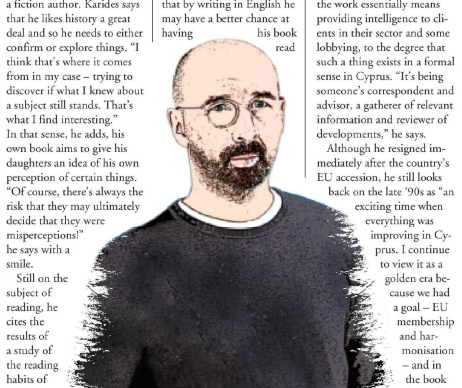
Albert Londres (photo above) wrote The Wandering Jew before the Holocaust. Published in 19301 it makes awkward reading today with its condescending colonial tone, but it stands as a masterful example of investigative journalism2, and is considered a major French literary work.
Londres had immersed himself in the lives of Jews in the East End of London and the Muranow ghetto of Warsaw and witnessed the wave of antisemitic pogroms in central Europe that fueled Zionism. He then traveled to Palestine where thousands of Jews had begun to move in the late 20s buying up land and clashing with what he estimates were 700,000 Arabs there.
His examination of the ‘Jewish condition’ was sympathetic to the cause but also raised concerns about what he described as growing Zionist intoxication. At some point Londres remarks: “You had enough of living under the boot. Everyone can understand how good it must feel to raise your head up high. But if you go around with your head in the air you cannot see what is happening around you.”
While highly personal, his work offered unprecedented insight at the time. It is said to have helped shift public opinion on the plight of the Jews and affected policies on a range of other issues including forced labour and the exploitation of Black Africans. Londres’ unique strength was that he recorded the facts on the ground, documenting the cruelty and injustice and confronting his interlocutors with the implications of their actions.
Without veering into the circumstances of how the ‘wandering Jew’ finally arrived in Palestine or the strife that has engulfed the region ever since, the key fact on the ground today is that the state of Israel exists.
But it is also a fact that this internationally recognised state has killed more than 62,000 Palestinians in Gaza since October 2023. It is a fact that the IDF’s military campaign has pulverized the enclave and that the Palestinians trapped in it are being starved. It is a fact that the International Criminal Court issued arrest warrants for its prime minister and his former defense minister for war crimes and crimes against humanity. And it is a fact that the state faces a genocide case at the International Court of Justice.
To this depressing list one must now add the disgraceful fact that this state is targeting and killing journalists.
According to the Committee for the Protection of Journalists Israel is engaging in a “most deliberate effort to kill and silence journalists” while arbitrarily detaining and torturing others in retaliation for their work. Last month Anas Al Shariff and Mariam Abu Daqqa were added to the list of 184 Palestinian journalists killed by Israel3.
Its audacious war on journalism must be seen in the broader global context in which journalism is being vilified by autocrats like Trump, Orban and Netanyahu who have persistently sought to discredit the journalistic profession. What would petty politicians know of the history of generations of war correspondents who risked their lives to bring out the brutal reality of war and counter the official speak of military authorities? The Fisks, the Efthyvoulous, the Andersons and Foleys who roamed the Middle East and always found ways of infiltrating high-risk war zones for the story because they demanded factual accuracy, the enemy of the aforementioned populist trio.
It is impossible today, in the age of total surveillance and drone targeted assassinations, to expect media organisations to ask of their correspondents to enter Gaza. Which is why international media must continue to insist collectively on gaining safe and unrestricted access while continuing to support their Palestinian colleagues there and to shame Israel for its actions.
On Monday evening Channel 4 News’ foreign correspondent Paraic O’Brien’s speaking from Tel-Aviv about developments in Gaza ended his dispatch with the following remarks: “One more thought if I may; those images you saw in our report from inside Gaza were brought to you by journalists who live and work there. Journalists like myself are not allowed there; And those journalists just like many Gazans are looking for food for themselves and their family but they are doing so at the same time as wanting to shine a light on what’s happening in their home”.
That ‘home’ has become a far darker place than the ghettos which the journalism of Londres first helped bring to world attention. Israel knows that world attention today is erratic and malleable. It knows also that an ill-informed, confused and increasingly compliant global public is less likely to insist on holding it to account for all that it is doing.
Notes
- The Wandering Jew Has Arrived, Albert Londres, 1932. English Translation 2017.
- The Albert Londres Prize is the highest French journalism award – first awarded in 1933.
- CPJ: https://cpj.org/data/killed/2025/?status=Killed&motiveConfirmed%5B%5D=Confirmed&type%5B%5D=Journalist&start_year=2025&end_year=2025&group_by=location
 Nicholas Karides